

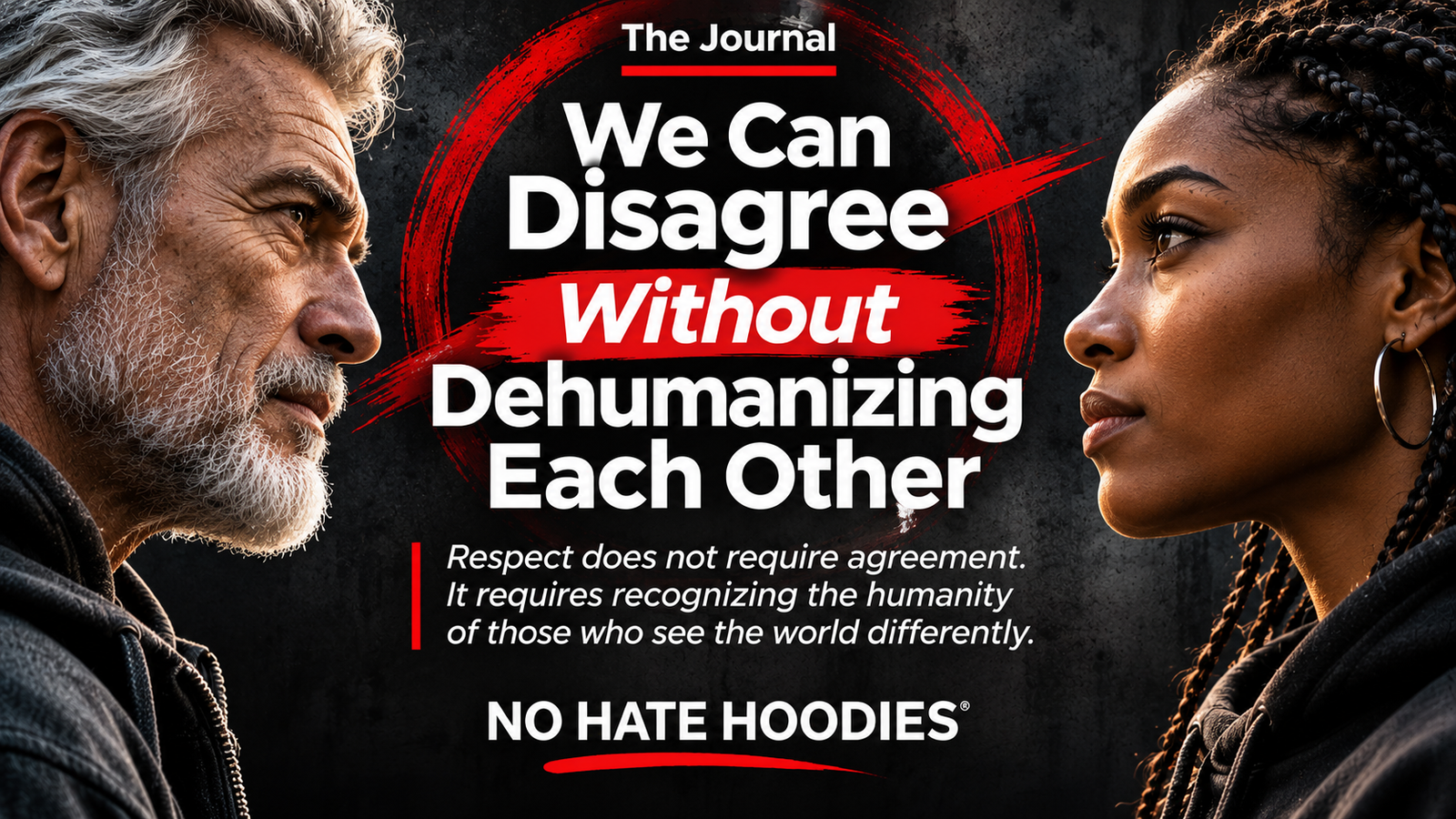
Respect does not require agreement. It requires recognizing the humanity of those who see the world differently.
Disagreement is an unavoidable part of the human experience. We come from different backgrounds, grow up with different influences, and develop beliefs shaped by our families, cultures, experiences, and personal convictions. It would be unreasonable to expect everyone to see the world in exactly the same way. Yet somewhere along the way, we seem to have lost the ability to disagree without turning those differences into judgments about one another’s character, intelligence, or worth.
A difference of opinion can quickly become a personal confrontation. A conversation that begins with opposing perspectives can end with insults, resentment, and hostility. Rather than trying to understand why someone sees an issue differently, we may dismiss them entirely. We stop engaging with their ideas and begin attacking who they are.
Perhaps the problem is not that we disagree too much, but that we have forgotten how to disagree while preserving our shared humanity.
Disagreement Is Not the Enemy
There is nothing inherently wrong with disagreement. In fact, differing perspectives can challenge assumptions, encourage critical thinking, and help us develop a deeper understanding of the world. Meaningful conversations do not require everyone to reach the same conclusion. They require a willingness to recognize that another person’s experiences and perspectives may differ from our own.
The difficulty begins when disagreement becomes personal. Instead of questioning an idea, we question a person’s worth. Instead of challenging an argument, we attack someone’s identity. We begin to assume that those who disagree with us must be ignorant, dishonest, or somehow less deserving of respect.
This transformation is dangerous because it replaces curiosity with contempt. Once we decide that someone is unworthy of being heard, meaningful communication becomes nearly impossible. We stop listening to understand and begin listening only for opportunities to respond, criticize, or prove ourselves right.
A society in which people cannot disagree respectfully risks becoming one in which differences are no longer opportunities for understanding, but reasons for division.
The Difference Between Accountability and Dehumanization
Respecting another person’s humanity does not mean accepting every belief, excusing harmful behavior, or remaining silent in the face of injustice. There are ideas and actions that deserve serious criticism, and there are circumstances in which taking a firm stand is both appropriate and necessary.
But there is an important distinction between condemning harmful behavior and denying the humanity of the person responsible for it.
We can reject prejudice without embracing hatred. We can challenge discrimination without resorting to cruelty. We can defend our convictions without treating everyone who disagrees as an enemy.
Human dignity is not a reward reserved for those whose beliefs we approve of. It remains an inherent part of being human, even when someone’s behavior requires accountability or their ideas deserve opposition.
Recognizing that dignity does not weaken our principles. It gives those principles greater meaning by demonstrating that our commitment to respect extends beyond the people we find agreeable.
We can stand firmly against what we believe is wrong without abandoning what we believe is right.
Listening Is Not the Same as Agreeing
One of the simplest ways to reduce hostility is also one of the most difficult: learning to listen without immediately preparing a response.
Listening does not require surrendering our beliefs or pretending that every perspective carries equal merit. It means making an effort to understand what another person is actually saying before deciding how to respond.
Sometimes we discover that our disagreements are less significant than we imagined. Other times, we find that our differences are substantial and unlikely to be resolved. Either outcome can be valuable when the conversation is approached with patience and sincerity.
We can also recognize when a discussion has become unproductive or harmful. Respectful disagreement does not require us to tolerate personal abuse, abandon healthy boundaries, or continue conversations that serve no constructive purpose.
The goal is not to eliminate disagreement. It is to prevent disagreement from becoming an excuse for humiliation, hostility, or contempt.
When we approach difficult conversations with this understanding, we create room for something increasingly uncommon: the possibility of disagreeing without becoming divided by hatred.
Choosing Respect in a Divided World
Everyday life presents countless opportunities to practice respectful disagreement. These moments occur in our families, workplaces, neighborhoods, friendships, and online conversations. They arise when someone expresses an unfamiliar opinion, challenges something we believe, or approaches a situation from a perspective we do not share.
Our responses in these moments matter.
We can choose words that clarify rather than inflame. We can question ideas without attacking identities. We can recognize when our emotions are influencing our judgment and resist the temptation to respond with unnecessary cruelty.
None of this guarantees agreement. Nor does it mean every relationship can or should be preserved despite serious differences. Sometimes maintaining our integrity requires establishing distance or refusing to participate in harmful behavior.
But even when agreement is impossible, we can choose not to contribute to the dehumanization of others.
At No Hate Hoodies, we believe this distinction is essential to building a culture rooted in dignity, compassion, and mutual respect. Our message is not that everyone must think alike or set aside deeply held convictions. It is that our differences should never become automatic justifications for hatred.
Through our anti-hate apparel, we express the belief that human dignity deserves recognition across the boundaries that too often separate us. But the message matters most when it extends beyond clothing and influences how we treat one another.
A statement against hate carries greater meaning when it shapes our conversations, challenges our assumptions, and reminds us to see the human being behind an opposing opinion.
Our Shared Humanity Is Greater Than Our Differences
We will never agree on everything. Our histories, experiences, beliefs, and values are too varied for that to be realistic. Nor should a world of diverse human beings be expected to embrace complete uniformity of thought.
The challenge is learning to live with those differences without allowing them to destroy our capacity for compassion.
We can be passionate without being cruel, confident without being dismissive, and principled without becoming intolerant of another person’s humanity. We can acknowledge that some disagreements are serious while refusing to let contempt become our default response.
Ultimately, the strength of our convictions should not be measured by how effectively we diminish those who disagree with us. It should also be reflected in our ability to stand by our beliefs without surrendering our humanity.
We do not have to agree with one another to recognize the dignity in one another.
And perhaps learning to make that distinction is one of the most important steps toward a world with less hate.
NO HATE HOODIES
Let There Be No Hate Among Us.